The traditions

Many lineages. One Jain dharma.

Svetambara and Digambara, Murtipujak and Sthanakvasi, Terapanth and Taranpanth — described in their own terms, with what divides them stated honestly and briefly.

How this page is written

Nothing below is offered as a verdict. Each tradition is described as it understands itself, and no practice is presented as more correct than another. The order in which they appear carries no meaning whatsoever.

If you practise within one of these traditions and find it thinly or wrongly represented, we would genuinely rather hear it than leave it standing. Write to us.

“White-clad”

Svetambara

Svetambara ascetics wear simple unstitched white cloth. The tradition accepts the Agamas as canonical and holds that women may attain liberation in this very birth.

Places of worship
Derasar, upashraya or sthanak
Historic heartland
Gujarat, Rajasthan, Punjab and Mumbai

Distinguishing marks

  • Reveres Bhagwan Mallinath, the nineteenth Tirthankara, as a woman
  • Accepts the forty-five Agamas, compiled at the Council of Valabhi, as scripture
  • Keeps Paryushan Parva for eight days, closing with Samvatsari

Lineages within it

Murtipujak

Also called Deravasi or Mandirmargi. Venerates ornamented idols in derasars through the eightfold ashta-prakari puja, organised into gacchas such as Tapa and Kharatara.

Sthanakvasi

Arising from the fifteenth-century Lonka Shah reform, it sets aside image worship and gathers in a sthanak. Ascetics wear the muhpatti at all times.

Terapanth

Founded by Acharya Bhikshu in 1760. Aniconic, and unusual in placing the entire order under a single acharya. Its samanis may travel abroad to teach.
“Sky-clad”

Digambara

Digambara munis renounce possession completely, including clothing, as the full expression of aparigraha. Aryikas, the order’s nuns, keep a single unstitched white sari.

Places of worship
Basadi, chaityalaya or mandir
Historic heartland
Karnataka, Maharashtra, Madhya Pradesh and Bundelkhand

Distinguishing marks

  • Idols are carved unadorned, with downcast eyes and no ornament, showing the Tirthankara in complete detachment
  • Holds that the original Purva canon was lost, and looks to the Shatkhandagama, the Kasayapahuda and the works of Acharya Kundakunda
  • Keeps Das Lakshana Parva for ten days, closing with Kshamavani

Lineages within it

Bispanthi

Follows the traditional temple rite with bhattaraka guidance, aarti and elaborate puja.

Terapanth

A reform current — distinct from the Svetambara order of the same name — favouring a simpler rite without bhattaraka authority.

Taranpanth

Founded by Taran Svami; venerates scripture rather than images, in halls without idols.

Kanjipanth

Follows Kanji Svami’s reading of Kundakunda, with strong emphasis on the soul’s own nature.

Where they differ

Four honest distinctions.

These are the questions on which the traditions genuinely diverge. Each answer is given as that tradition gives it.

What ascetics wear

Svetambara

Monks and nuns alike wear unstitched white cloth.

Digambara

Munis keep no possessions at all; aryikas wear one white sari.

Which scriptures are canonical

Svetambara

The forty-five Agamas, as compiled at Valabhi, are held to be canonical.

Digambara

The Purvas are held to be lost; the Shatkhandagama and Kundakunda are authoritative.

Liberation for women in this birth

Svetambara

Held to be attainable in this birth; Mallinath is revered as a woman.

Digambara

Held to require rebirth first, as full renunciation is understood differently.

Whether images are venerated

Svetambara

Yes among Murtipujak; Sthanakvasi and Terapanth are aniconic.

Digambara

Yes in most lineages, with unadorned idols; Taranpanth venerates scripture instead.

Held in common

On the hill, nobody asks.

For all four distinctions above, there are places where they simply stop applying — where every Jain climbs the same steps, before the same Tirthankara, for the same reason.

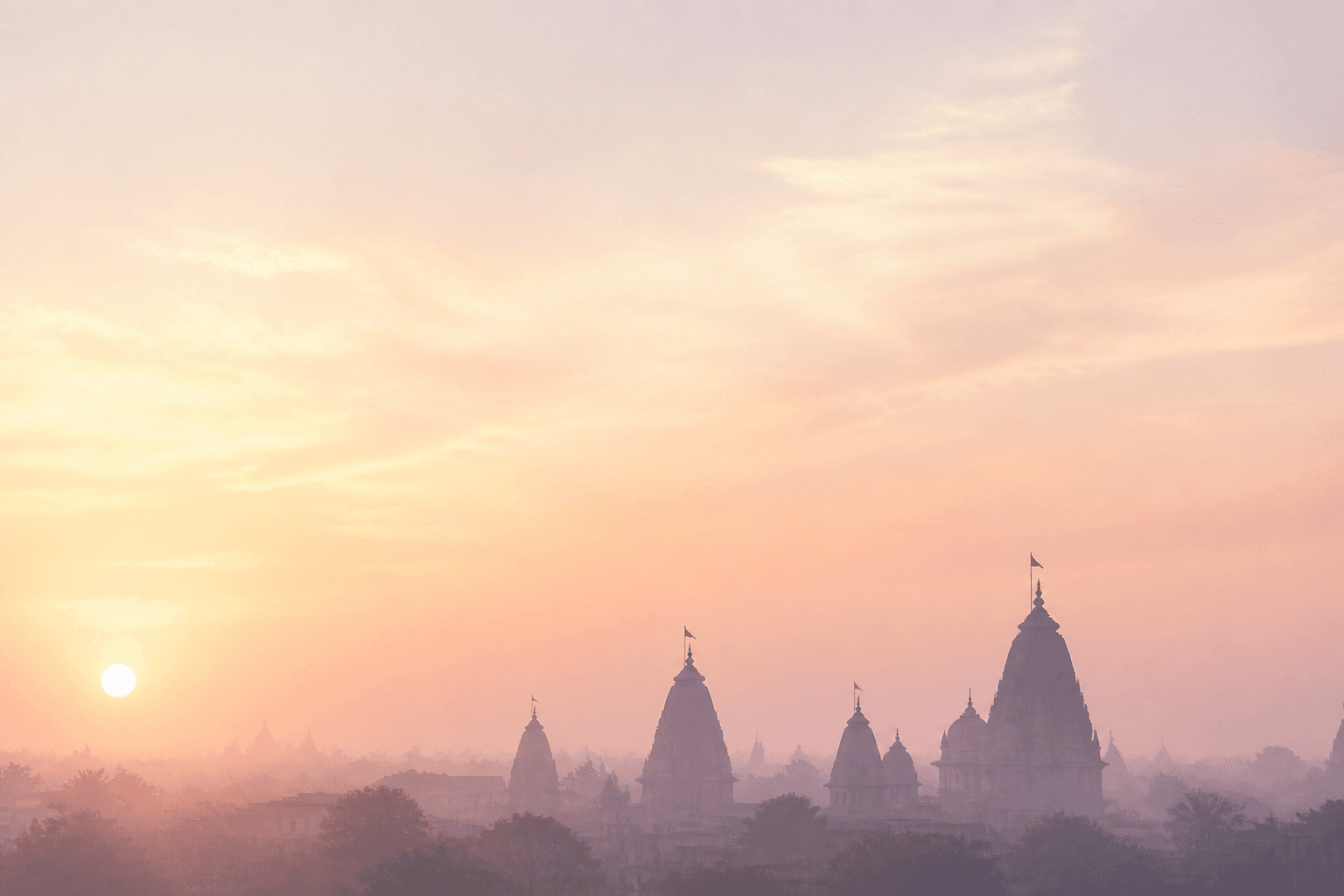
Jain temple spires at sunrise

Palitana

Shatrunjaya Hill, Gujarat

More than eight hundred temples crown a single hill, reached by a climb of some three and a half thousand steps. Bhagwan Rishabhdev preached here. The ascent is kept chiefly by the Svetambara tradition, and Digambara shrines stand on it too.

Shikharji

Parasnath Hill, Jharkhand

Twenty of the twenty-four Tirthankaras attained moksha here. Digambara and Svetambara pilgrims climb the same path, and both maintain shrines along it.

Pavapuri

Nalanda, Bihar

Where Bhagwan Mahavir attained nirvana. The Jal Mandir set in its lotus lake is venerated without distinction by every tradition.

Girnar

Junagadh, Gujarat

The site of Bhagwan Neminath’s liberation, held sacred across the traditions, with temples of more than one lineage on the ascent.

Set your tradition. See your own practice.

Choose your lineage once and the Panchang, the festival dates and the places nearby all follow it — without hiding anyone else’s.