णमो अरिहंताणं
The Navkar Mantra
The first prayer every Jain child learns names no sect, no lineage and no individual. It bows to five qualities — and every tradition recites it.
Purpose
Jains have been separated by sect for centuries, and by geography for a generation. One Jainism is built on the far larger share of what we hold in common.
There are perhaps five million Jains in the world. We are a small community by any measure — and we have spent a great deal of our history describing the distances between us rather than the ground beneath us.
Those distances are real and they deserve respect. A Digambara muni and a Sthanakvasi sadhvi do not practise the same way, and no app should pretend otherwise. But a Jain child in Leicester, a trustee in Indore and a pilgrim climbing Shatrunjaya are all reciting the same Navkar Mantra, keeping the same vows and counting toward the same liberation.
That common ground is not a compromise between traditions. It is the largest thing any of us actually own — and until now, nobody had built it a home.
The principle we build on
अनेकान्तवाद
Anekantavada is not a modern convenience borrowed to smooth over disagreement. It is a Jain doctrine, taught for two and a half thousand years, holding that reality is many-sided and that any single viewpoint — however sincere — captures only part of it.
A platform for all Jains is simply that principle applied to software. If our own philosophy insists that no one perspective is complete, a product built for this community cannot be designed around one sect and offered to the rest as an afterthought.
Common ground
Before any question of sect arises, this much is agreed — by all of us, everywhere.
णमो अरिहंताणं
The first prayer every Jain child learns names no sect, no lineage and no individual. It bows to five qualities — and every tradition recites it.
तीर्थंकर
From Bhagwan Rishabhdev to Bhagwan Mahavir, the same twenty-four ford-makers are revered by every Jain, in the same order, for the same reasons.
पंच महाव्रत
Ahimsa, satya, asteya, brahmacharya and aparigraha. The vows do not change between traditions — only the intensity with which they are undertaken.
तत्त्वार्थ सूत्र
Umaswati’s sutras are the one text accepted as authoritative across the Digambara and Svetambara canons alike — a shared foundation, already written.
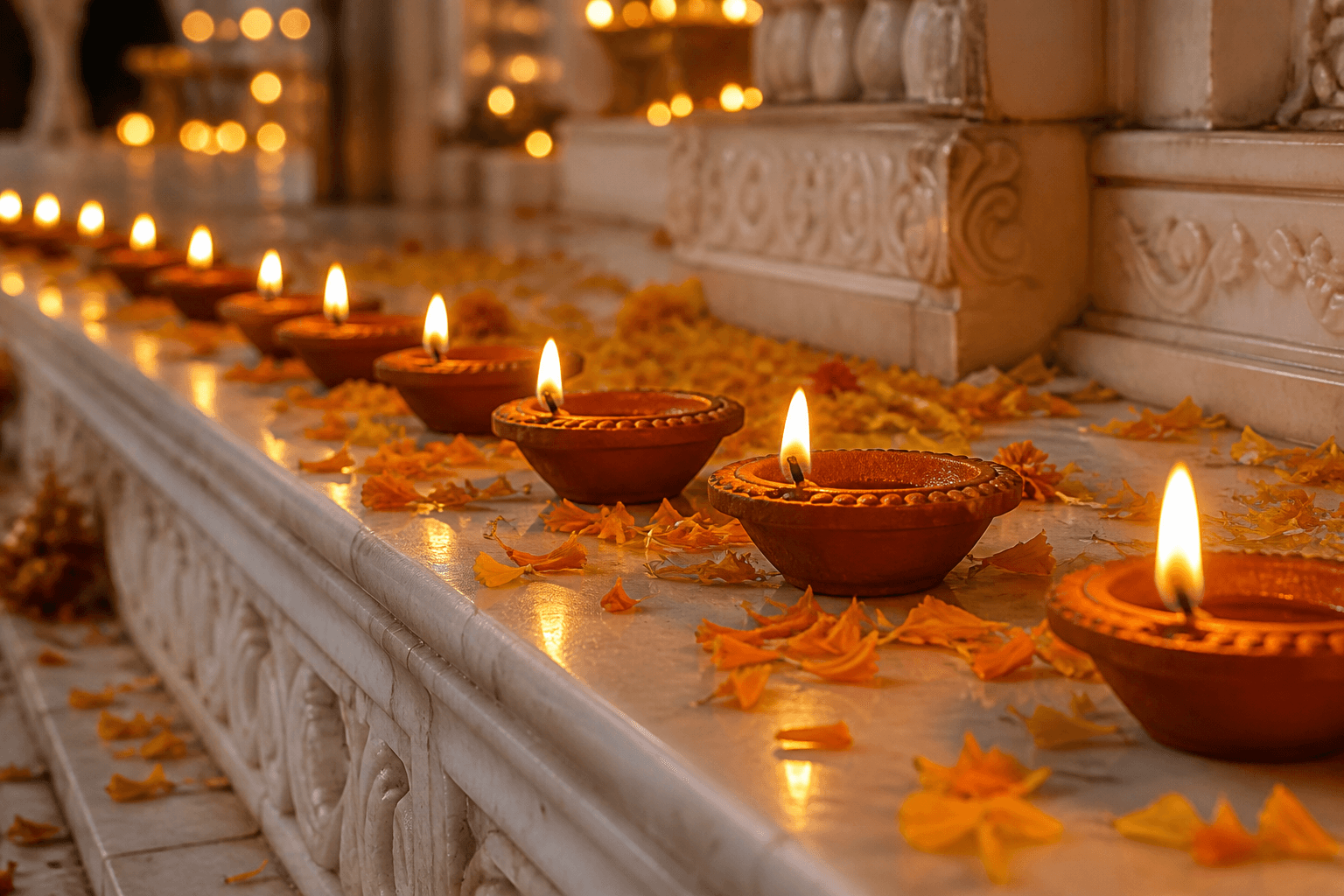
The same week, the same word
Svetambaras keep Paryushan for eight days and close it with Samvatsari. Digambaras keep Das Lakshana for ten and close it with Kshamavani. The counts differ. The calendars differ by a week.
And then every Jain alive turns to everyone they may have wronged and says the same thing.
मिच्छामि दुक्कडम्
How we keep it honest
Saying a platform serves everyone is easy. These are the rules that make it true in the interface itself.
Nothing is ordered by prominence. Places, festivals and content are labelled by tradition and filtered by yours — never ranked against each other.
Paryushan runs eight days and Das Lakshana ten. Both are correct. The Panchang follows the tradition you set, not the one we found easiest to build.
A derasar, a sthanak, a basadi and a chaityalaya are not the same thing. Each is listed with the name its own community uses.
The trust that runs a place maintains its own listing, its own timings and its own words. We do not paraphrase anyone’s practice for them.
Why now
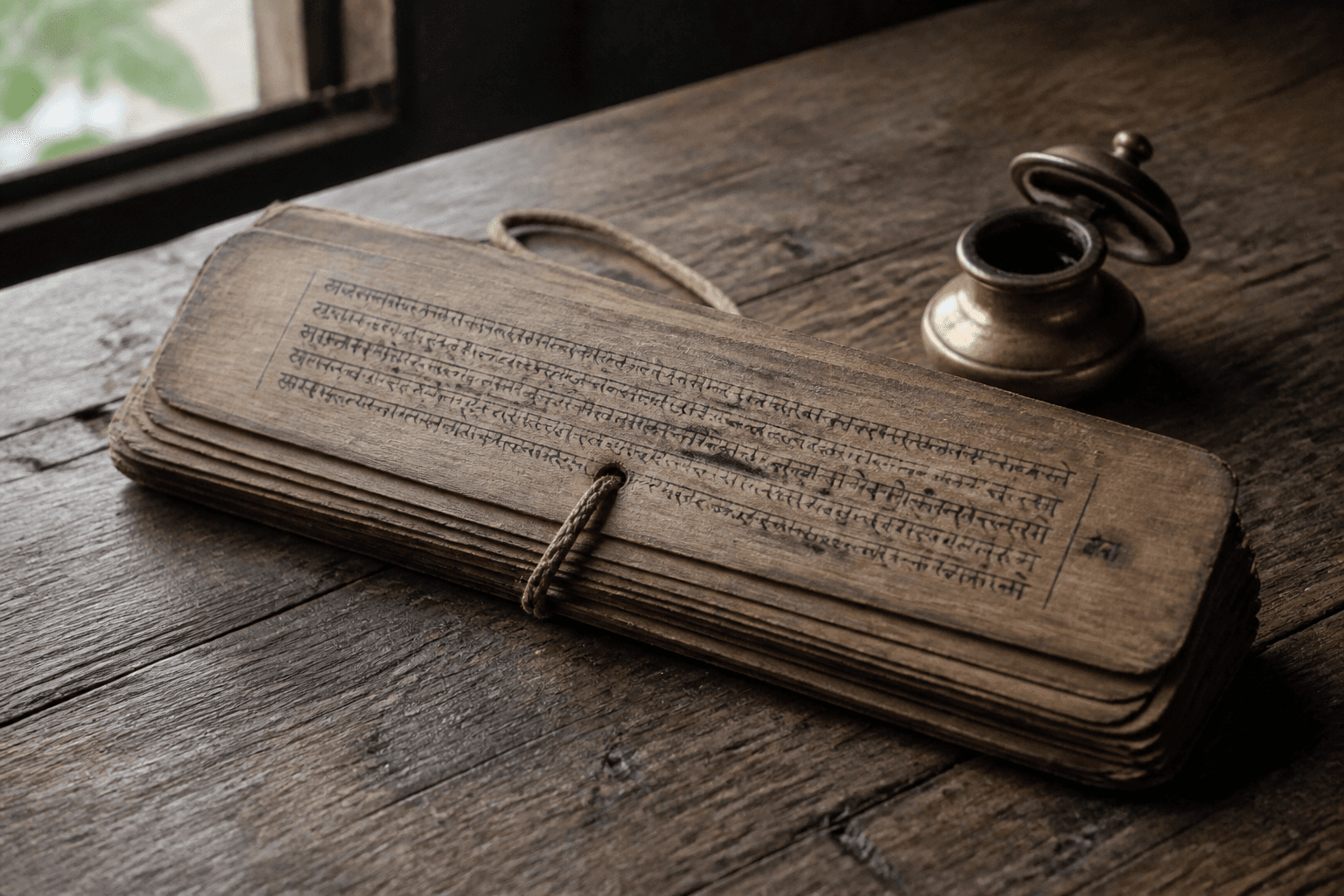
A significant share of Jain families now live outside India — in Britain, North America, East Africa, Belgium, the Gulf and Singapore. Their children are growing up without a derasar down the road and without the aunt who always knew when Paryushan begins.
For them, sectarian distance is not the obstacle. Distance itself is. What reaches them is whatever fits on a phone — and if that is only a forwarded image of a printed panchang, a great deal is going to be lost in one generation.
Gathering the community into one place is not a convenience. It is how a small tradition survives being spread thin.
If your tradition is represented poorly here, that is a fault we want reported — and corrected by someone who practises it.